

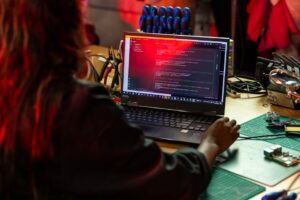
Hacker conferences, known for their exchange of knowledge and networking opportunities, also carry a less desirable tradition: the “con crud,” a collection of illnesses passed among attendees. To address this, New Zealand’s premier hacker conference, Kawaiicon, took a proactive step by implementing a real-time carbon dioxide monitoring system throughout its venue. In essence, this hacker conference installed a literal antivirus, tackling the spread of airborne viruses by monitoring and displaying air quality data to attendees.
Table of contents
Official guidance: IEEE — official guidance for This hacker conference installed a literal antivirus
Key Developments
Prior to the event’s commencement on November 6th, organizers meticulously installed do-it-yourself (DIY) CO2 monitors throughout the Michael Fowler Centre, the conference venue. This initiative allowed attendees to access a public online dashboard displaying real-time air quality readings for various areas, including session rooms, children’s areas, and the registration desk. This information was available even before attendees arrived at the venue, enabling them to make informed decisions about their personal safety measures. The organizers highlighted the community’s risk-aware nature, stating, “It’s ALMOST like we are all nerds in a risk-based industry.”
The project involved deploying 13 RGB Matrix Portal Room CO2 Monitors, adapted from a design by Adafruit Industries, a US-based electronics company. These monitors were connected to an online dashboard providing live CO2 readings, daily high and low levels, and historical data, enabling attendees to track air quality trends within different rooms. Kawaiicon collaborated with researchers from the University of Otago’s public health department to test and validate the CO2 monitors’ effectiveness.
Addressing Airborne Virus Transmission at a Hacker Conference
Elevated CO2 levels are known to reduce cognitive function and increase the transmission of airborne viruses, which can persist in poorly ventilated spaces. Higher CO2 concentrations indicate a greater potential for viral spread, making CO2 data a useful proxy for assessing pathogen levels. The Australian Academy of Science has even described indoor air pollution as “someone else’s breath backwash.” Kawaiicon organizers were particularly concerned about running a large event during a measles outbreak, alongside ongoing waves of COVID-19, influenza, and RSV. This hacker conference installed a literal antivirus, not through software, but through environmental monitoring and transparency.
Jeff Moss, founder of the Defcon and Black Hat security conferences, praised Kawaiicon’s initiative. He noted the lack of readily available and inexpensive network monitoring solutions for CO2 levels, emphasizing that Kawaiicon’s DIY solution embodied the true spirit of hacking. The conference organizers explained that the Michael Fowler Centre utilizes a single HVAC system with MERV-8 filters, a standard choice for homes but potentially insufficient for a large gathering. They emphasized that the venue’s older infrastructure limited their ability to control airflow and improve air quality.
Implementation Challenges and Solutions
The Michael Fowler Centre’s unique architecture, characterized by Scandinavian brutalism and intricate woodwork designed to enhance sound and air quality, presented specific challenges. The building’s cathedral-like acoustics required the air-monitoring team to strategically place the RGB monitors in stereo, with two units on each level of the Main Auditorium, as well as in the Renouf session space, daycare, Kuracon (kids’ hacker conference) areas, Quiet Room, Registration Desk, and Green Room. This hacker conference installed a literal antivirus, adapting to the venue’s constraints to provide comprehensive air quality monitoring.
According to Sput, a Kawaiicon spokesperson, typical health and safety considerations, along with effective monitor placement (breathing height, multiple monitors for multiple spaces, avoiding windows/doors), were crucial. Sput likened the initiative to providing other accessibility options, highlighting the tech community’s ability to set up such systems with volunteer support. The accessibility of CO2 monitor technology made the project feasible and replicable for other events. The aim was to enable attendees to quickly assess conditions and make informed decisions about personal protective measures.
Attendee Response and Impact
Attendees were observed actively checking CO2 levels on their phones, adjusting their masking behavior based on the readings in different conference areas. The real-time data empowered attendees to take control of their health and safety, mitigating the risk of infection. This hacker conference installed a literal antivirus, and the attendees utilized the data to make informed decisions about their own health.
Adafruit founder Limor “Ladyada” Fried commended the conference’s use of the Matrix Portal project. She emphasized the value of individuals acquiring new skills and understanding how to measure and monitor air quality, particularly during health crises. Fried highlighted the self-reliance of hackers and makers in addressing their public health information needs. Kawaiicon’s initiative serves as a model for other conferences and events seeking to improve attendee health and safety in the face of ongoing public health challenges. This hacker conference installed a literal antivirus showing how technology and community can combine for public health.
By implementing a real-time CO2 monitoring system, Kawaiicon demonstrated a proactive approach to mitigating the spread of airborne illnesses at a large gathering. This hacker conference installed a literal antivirus, highlighting the potential for technology to address public health concerns and empower individuals to make informed decisions about their well-being. The success of this initiative underscores the importance of accessible technology and community collaboration in creating safer and healthier environments for all.
Technology Disclaimer: Product specifications and features may change. Always verify current information with official sources before making purchase decisions.
Explore more: related articles.